Burnout Isn’t a Failure — It’s a Warning
Burnout doesn’t arrive all at once.
It seeps in quietly, disguised as dedication, resilience, and “just getting through one more day.”
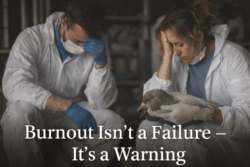
In rescue work, burnout is often misunderstood. From the outside, it can look like someone losing motivation, becoming withdrawn, or stepping back “when they’re needed most.” From the inside, it feels very different. It feels like carrying too much for too long — and finally reaching a point where your body, mind, and heart say enough.
This isn’t weakness. It’s biology. It’s psychology. And increasingly, it’s structural.
The Weight We Don’t Talk About
Rescue work asks us to hold suffering and hope at the same time. We witness neglect, cruelty, and loss — often repeatedly — while being expected to remain calm, capable, and compassionate. We celebrate the wins, grieve the losses quietly, and keep moving because there’s always another life that needs help.
What’s rarely acknowledged is that this kind of work requires constant emotional regulation. There is no off switch. Even rest can feel temporary, because the responsibility never truly leaves.
Over time, that takes a toll.
The Social Media Trap
Over the years, many rescues were encouraged — even pressured — to rely on social media as their primary way to reach the public. We were told that if we shared our work openly, built an audience, and engaged consistently, we could educate, fundraise, and save more lives.
And for a while, that was true.
But what isn’t discussed often enough is how fragile that reliance can be. Algorithms change. Accounts are restricted or removed without warning. Visibility is throttled. Monetization disappears. Appeals go unanswered. Years of work, trust, and connection can be reduced overnight by decisions made far away from the people doing the actual care.
This creates a quiet but powerful form of stress. When your ability to help animals depends on platforms you don’t control, burnout isn’t just emotional — it’s structural. You’re not only caring for lives; you’re constantly bracing for the possibility that your voice, reach, or support system could vanish through no fault of your own.
Rescue work was never meant to be at the mercy of algorithms. And yet, many of us find ourselves carrying that added weight — expected to be caregivers, educators, fundraisers, content creators, and crisis managers all at once.
That pressure takes a toll. And acknowledging it isn’t complaining — it’s being honest about the environment rescue work now exists in.
When Stepping Back Is an Act of Care
One of the hardest truths to accept is that sometimes the most responsible choice is to pause. Not to quit caring — but to care sustainably.
There is a saying used on airplanes: put your own oxygen mask on first. It’s often repeated, but rarely honored in practice. In rescue culture, self-sacrifice is praised so highly that self-preservation can be sometimes be seen as betrayal.
But burned-out caregivers don’t save more lives. They save fewer — and often at great personal cost. A worn-out rescuer saves fewer lives. A dead rescuer saves none. Sometimes that death is brought on by health problems exacerbated by the stress of burnout. Sometimes it comes by a person’s own hand, when they feel as if stepping back is the ultimate failure and after all they’ve done, they can’t bring themselves to accept that.
Stepping back doesn’t erase the good you’ve done. It doesn’t mean you didn’t try hard enough. It means you listened when your limits made themselves known.
A Healthier Way Forward
If rescue work is going to be sustainable, we have to change how we talk about burnout. Not as a moral failure. Not as a lack of toughness. But as feedback — a signal that something in the system needs to change.
That includes:
- Normalizing rest and boundaries
- Diversifying support beyond social media alone
- Valuing caregivers as much as outcomes
- Allowing people to step back without shame
Rescue exists because of empathy. And empathy must extend to the people doing the work — or the work will eventually consume them.
Burnout isn’t the end of caring.
It’s the moment caring demands a different shape.