Valuation vs. Worth: Why the Price of an Animal Doesn’t Define Its Value
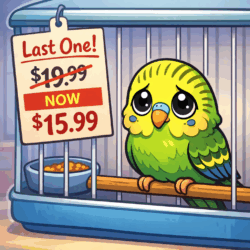
There’s a number people love to attach to animals.
Sometimes it’s a purchase price—$20, $200, $2,000.
Sometimes it’s an adoption fee.
Sometimes it’s the quiet, unspoken number in someone’s mind when they decide whether an animal is “worth it.”
But here’s the truth:
Price is a transaction.
Worth is something entirely different.
The Dangerous Shortcut: Equating Cost with Value
Humans are wired to use price as a shortcut for value. In most areas of life, that works well enough:
- A higher-priced tool is often better made
- A more expensive service often reflects more experience
But when we apply that same logic to living beings, it breaks down completely.
Because animals are not products.
And yet, we see it all the time:
- “It’s just a $20 parakeet.”
- “It’s not worth a vet bill that high.”
- “You can just replace it.”
That mindset doesn’t come from cruelty—it comes from conditioning.
But it still leads to harm.
The Reality: Life Doesn’t Scale with Price
A $20 parakeet feels fear.
A $3,000 macaw feels fear.
A $50 rescue dog feels joy.
A $5,000 purebred feels joy.
There is no sliding scale where:
more expensive = more alive
more valuable = more deserving of care
Life does not work that way.
The capacity to feel, to bond, to trust, to suffer—that is not tied to market value.
A Simple Story About “Cost” versus “Value”
When I gave birth, I had very good insurance.
After everything—the hospital stay, the care, the delivery—my out-of-pocket cost was under $200.
Less than what many people spend on a cage setup.
Less than some parrots cost to purchase.
So by that logic…
Was my child worth $200?
Of course not.
That number reflected:
- insurance coverage
- billing structures
- negotiated rates
It had absolutely nothing to do with the value of the life in my arms.
And yet, we use that same flawed logic with animals every day.
Where Price Actually Comes From
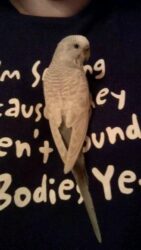
Price is influenced by:
- Rarity
- Breeding demand
- Aesthetics
- Market trends
It reflects human interest, not intrinsic worth.
A brightly colored bird may cost more than a less flashy one.
A designer breed may cost more than a mixed one.
But those numbers say nothing about:
- personality
- intelligence
- emotional capacity
- ability to form bonds
They are economic labels—not moral ones.
The Quiet Bias We Don’t Always Notice
Even people who love animals can fall into this trap without realizing it.
We may:
- justify higher care for “expensive” animals
- hesitate on treatment for “cheap” ones
- feel different levels of urgency based on perceived value
That doesn’t make someone a bad person.
It makes them human.
But it’s worth examining—because those small decisions add up.
The Rescue Perspective
In rescue work, this becomes painfully clear.
The animals most often overlooked are:
- the “common” ones
- the ones without flashy traits
- the ones deemed “replaceable”
And yet, those same animals:
- bond just as deeply
- trust just as fully
- suffer just as intensely
They don’t know their “price.”
They only know:
- who feeds them
- who comforts them
- who shows up
Worth Is Measured Differently
If we step outside of economics, worth starts to look very different.
It’s found in:
- the bird that greets you every morning
- the dog that waits by the door
- the animal that learns to trust again after being failed
Worth is measured in:
- connection
- presence
- relationship
Not dollars.
A Shift in Perspective
When we stop asking:
“What is this animal worth?”
And start asking:
“What does this life deserve?”
Everything changes.
Care becomes less conditional.
Decisions become more compassionate.
And animals stop being ranked—and start being recognized.
Final Thought
Price is something we assign.
Worth is something inherent.
And when it comes to animals, the two are not just different—they are completely unrelated.
Because to the animal in front of you, there is no number.
There is only the question:
“Will you care for me?”
And how we answer that question says far more about our values than theirs.